Rudbeckia Marmalade
Rudbeckia Marmalade
Couldn't load pickup availability
Share
Rudbeckia 'Marmalade' Seeds
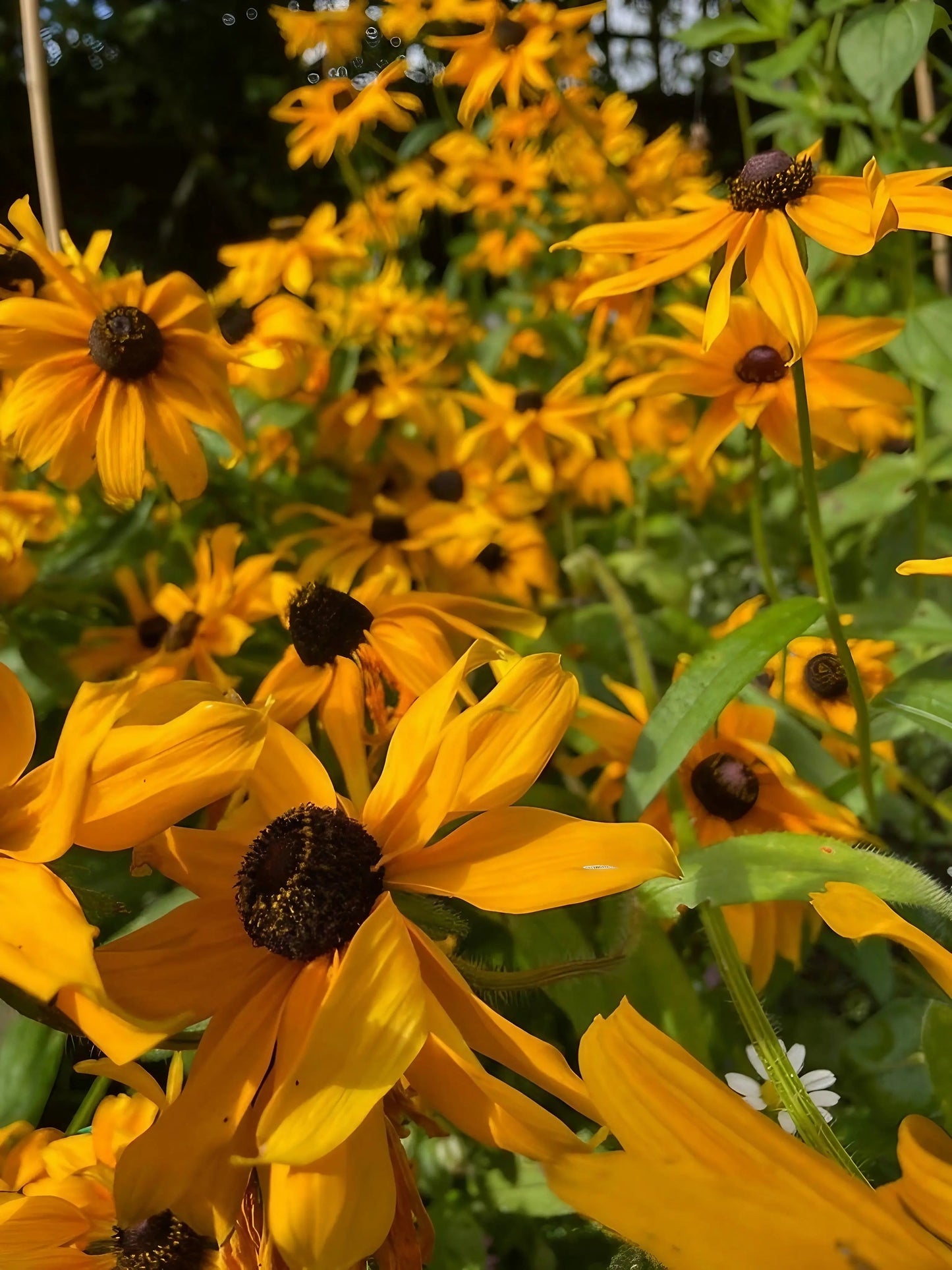
Just as other flowers start to fade in September, 'Marmalade' hits its stride. It produces massive, 10cm wide daisy-like blooms in a rich, glowing shade of golden-orange, each centred with a velvety chocolate-brown "eye" (cone).
This is a compact, robust variety of Black-eyed Susan. Unlike taller types that can flop over in autumn winds, 'Marmalade' stays neat, bushy, and upright (approx 45cm tall). It is the ultimate container plant for late summer, creating a dome of sunshine that keeps glowing right up until the first hard frost of winter.
Read More
🌿 Understanding the Plant
Rudbeckia 'Marmalade' is a Half-Hardy Annual.
It originates from the North American prairies, so it loves sun but needs protection from spring frosts.
The "Short-Lived Perennial" Trick: Although grown as an annual for speed and vigour, in mild winters or sheltered spots, it can sometimes survive to flower a second year. However, for the best display, we recommend sowing fresh seeds each spring.
Top Tip: The flowers are incredibly weather-resistant. The petals are thick and waxy, meaning they don't turn to mush after heavy rain like Petunias do.
🌱 Growing Guide: How to Sow and Grow
Rudbeckia is easy to grow but needs a little warmth to get started.
Germination:
Sow indoors from February to April. Surface sow onto moist compost and do not cover (or use a very fine dusting of vermiculite), as they need light to germinate. Keep warm (20°C). Germination takes 10-14 days.
Where to Sow:
They demand full sun or very light shade. They thrive in rich, moisture-retentive soil (add compost!). They are fantastic in pots but remember to water them regularly as they are thirsty plants.
Care While Growing:
Deadhead: Snip off faded flowers to encourage new buds.
Slugs: Protect young seedlings from slugs when you first plant them out. Once the leaves are hairy and tough, slugs usually leave them alone.
📋 Plant Specifications
| Latin Name | Rudbeckia hirta |
| Common Name | Black-eyed Susan 'Marmalade' |
| Hardiness | H3 (Half-Hardy Annual) |
| Light Required | Full Sun ☀️ |
| Height | ↕️ 45cm - 50cm (Compact) |
| Spread | ↔️ 30cm |
| Spacing | 🌱 30cm apart |
| Great for | 🍂 Late Summer Colour 🏺 Pots & Containers ✂️ Cut Flowers 🐝 Pollinators |
| Seed Count | Approx. 500 seeds per packet |
🤝 Perfect Garden Companions
The golden-orange of 'Marmalade' looks stunning with late-season blues and purples:
- 💜 Salvia 'Violet Queen': The complementary contrast. The vertical, deep violet spikes of the Salvia cut through the rounded, golden mound of the Rudbeckia. Purple and Gold is the classic late-summer colour scheme.
- 🌾 Briza Maxima (Quaking Grass): The Prairie Look. The rattling seed heads of the grass turn golden-straw colour at the same time the Rudbeckia blooms, creating a natural, windswept aesthetic in a pot or border.
📅 Sowing & Flowering Calendar
Sow indoors in spring. Plant out in June. Flowers July to October (often until November).
| Month | J | F | M | A | M | J | J | A | S | O | N | D |
|---|---|---|---|---|---|---|---|---|---|---|---|---|
| Sow Indoors | 🟢 | 🟢 | 🟢 | |||||||||
| Flowers | 🌸 | 🌸 | 🌸 | 🌸 | 🌸 |
🏆 Officially Recognised Excellence
This is a top-tier plant for biodiversity. Rudbeckia hirta is listed on the RHS Plants for Pollinators list, providing high-quality nectar late in the season when other sources are scarce.